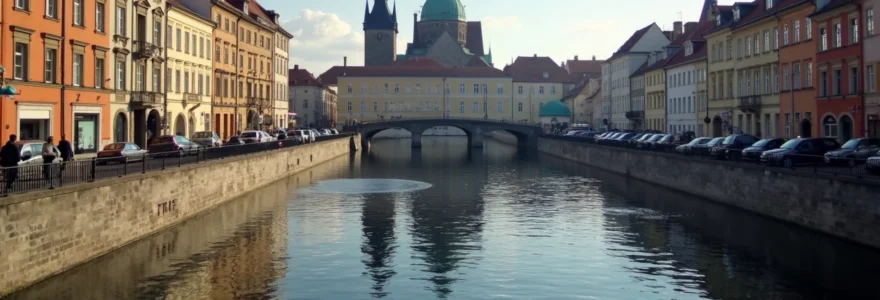
Embarking on a journey through Germany, Poland, and the Czech Republic offers travellers a rich tapestry of history, culture, and breathtaking landscapes. This Central European adventure connects iconic cities like Berlin, Warsaw, and Prague, each brimming with unique experiences and world-renowned attractions. From the remnants of the Cold War to medieval town squares, and from sobering World War II memorials to vibrant culinary scenes, this itinerary promises a deep dive into the heart of Europe’s past and present.
Strategic route planning: Berlin-Warsaw-Prague axis
The Berlin-Warsaw-Prague axis forms the backbone of an efficient Central European itinerary. This strategic route allows travellers to experience the diverse cultures of Germany, Poland, and the Czech Republic while minimising travel time and maximising exploration opportunities. Begin your journey in Berlin, Germany’s dynamic capital, before heading east to Warsaw, Poland’s resilient metropolis. Finally, venture south to Prague, the enchanting capital of the Czech Republic.
When planning your route, consider starting in Berlin and ending in Prague, or vice versa, depending on flight availability and prices. This linear path reduces backtracking and allows for a more relaxed pace, giving you ample time to soak in the atmosphere of each destination. You might also consider adding stops in smaller cities or towns along the way, such as Dresden in Germany or Wrocław in Poland, to enrich your cultural experience.
Cultural highlights and UNESCO sites along the journey
Berlin’s museum island and brandenburg gate
Berlin’s cultural landscape is dominated by its world-class museums and iconic landmarks. Museum Island , a UNESCO World Heritage site, houses five renowned museums showcasing art and artefacts from various periods of human history. The Pergamon Museum, with its monumental reconstructions of ancient architectural wonders, is a particular highlight.
No visit to Berlin is complete without seeing the Brandenburg Gate, a symbol of German unity and peace. This 18th-century neoclassical monument has witnessed numerous historical events and now stands as a testament to Berlin’s resilience and transformation.
Warsaw’s old town and royal castle
Warsaw’s Old Town, meticulously reconstructed after World War II, is a UNESCO World Heritage site that captures the essence of Polish perseverance. Stroll through its cobblestone streets, admire the colourful townhouses, and soak in the lively atmosphere of the Old Town Market Square.
The Royal Castle, once the residence of Polish monarchs, now serves as a museum showcasing elaborate interiors and priceless art collections. Its reconstruction after wartime destruction is a testament to Warsaw’s indomitable spirit.
Prague’s astronomical clock and charles bridge
Prague’s Old Town Square is home to the medieval Astronomical Clock, a marvel of engineering and artistry. Watch the hourly show of moving apostle figures and the symbolic representation of time and mortality. This intricate timepiece has been captivating visitors for over 600 years.
The iconic Charles Bridge, spanning the Vltava River, offers breathtaking views of Prague Castle and the city’s spires. Adorned with Baroque statues and bustling with artists and musicians, the bridge perfectly encapsulates Prague’s romantic atmosphere.
Auschwitz-birkenau memorial in poland
A sobering but essential stop on any Central European itinerary is the Auschwitz-Birkenau Memorial and Museum. This former Nazi concentration and extermination camp serves as a powerful reminder of the Holocaust and the depths of human cruelty. Visiting this site offers a profound and moving experience that contextualises much of 20th-century European history.
Dresden’s zwinger palace and frauenkirche
Dresden, often overlooked in favour of larger German cities, boasts remarkable Baroque architecture and world-class museums. The Zwinger Palace, with its ornate pavilions and beautiful gardens, houses several museums including the Old Masters Picture Gallery. The Frauenkirche, meticulously reconstructed after being destroyed in World War II, stands as a symbol of reconciliation and resilience.
Transportation logistics and border crossings
Deutsche bahn and PKP intercity rail services
Travelling between Germany, Poland, and the Czech Republic is most conveniently done by train. Deutsche Bahn, Germany’s national railway company, offers efficient and comfortable services within Germany and to neighbouring countries. For travel within Poland, PKP Intercity provides high-speed connections between major cities.
Consider purchasing a rail pass, such as the Interrail Global Pass or Eurail Pass, if you plan to make multiple train journeys. These passes can offer significant savings and flexibility, especially for longer itineraries.
Schengen area travel considerations
Germany, Poland, and the Czech Republic are all part of the Schengen Area, which means you can travel freely between these countries without going through border controls. However, it’s always wise to carry your passport or national ID card when crossing borders, even within the Schengen Area.
Remember that while border checks are minimal, random checks can still occur. Always ensure you have the necessary travel documents and any required visas before embarking on your journey.
Car rental options: sixt and europcar comparisons
For travellers preferring the flexibility of driving, car rental is a viable option. Companies like Sixt and Europcar offer competitive rates and a wide range of vehicles. When comparing options, consider factors such as:
- One-way rental fees for cross-border travel
- Insurance coverage, particularly for international travel
- Fuel policies and mileage limits
- Additional driver fees
- GPS rental options for easy navigation
Remember to familiarise yourself with driving regulations in each country, as they may differ slightly. For instance, Germany’s autobahns famously have no general speed limit, while Poland and the Czech Republic have strict speed limits on all roads.
Flixbus network for budget Inter-City travel
For budget-conscious travellers, FlixBus offers an extensive network of inter-city bus routes across Europe, including connections between Germany, Poland, and the Czech Republic. While bus travel may take longer than train or car, it can be significantly cheaper, especially for last-minute bookings.
FlixBus coaches typically offer amenities such as Wi-Fi, onboard entertainment, and comfortable seating, making longer journeys more pleasant. However, be sure to check the exact route and duration, as some inter-city bus journeys can involve multiple stops or transfers.
Accommodation strategies: from hostels to boutique hotels
Selecting the right accommodation can significantly enhance your Central European experience. Each city offers a range of options to suit various budgets and preferences. In Berlin, consider staying in trendy neighbourhoods like Kreuzberg or Prenzlauer Berg for a local feel. Warsaw’s Śródmieście district puts you at the heart of the action, while Prague’s Malá Strana offers charm and proximity to major attractions.
For budget travellers, hostels in these cities often provide excellent value, with many offering private rooms alongside traditional dorms. Look for hostels with communal kitchens and organised activities to meet fellow travellers and save on meals.
Mid-range budgets can stretch to comfortable hotels or serviced apartments, particularly useful for longer stays. Many international hotel chains have a presence in these cities, offering reliability and loyalty program benefits.
For a more luxurious experience, each city boasts a selection of high-end and boutique hotels. In Berlin, the Hotel Adlon Kempinski offers unparalleled views of the Brandenburg Gate. Warsaw’s Raffles Europejski combines historical grandeur with modern luxury, while the Augustine in Prague, set in a 13th-century monastery, provides a uniquely atmospheric stay.
Culinary exploration: traditional dishes and modern gastronomy
Berlin’s currywurst and third wave coffee scene
Berlin’s culinary scene is a delightful mix of traditional German fare and international influences. No visit is complete without trying currywurst, a street food staple consisting of fried sausage topped with curry-spiced ketchup. For the best experience, head to Konnopke’s Imbiss, a local institution since 1930.
The city’s third wave coffee scene is thriving, with numerous artisanal cafes serving expertly crafted brews. The Barn in Mitte and Five Elephant in Kreuzberg are pioneers of Berlin’s specialty coffee movement, offering single-origin beans and innovative brewing methods.
Polish pierogi and żurek in warsaw’s milk bars
Warsaw’s culinary landscape is a testament to Poland’s rich gastronomic heritage. Pierogi, stuffed dumplings with various fillings, are a must-try. For an authentic experience, visit a bar mleczny (milk bar), a type of cafeteria dating back to the communist era. These no-frills eateries serve hearty Polish cuisine at affordable prices.
Don’t miss żurek, a sour rye soup often served in a bread bowl. This traditional dish perfectly encapsulates the warmth and heartiness of Polish cuisine. For a modern take on Polish classics, restaurants like Elixir by Dom Wódki offer innovative dishes paired with craft vodkas.
Prague’s trdelník and pilsner urquell beer gardens
Prague’s culinary scene blends traditional Czech fare with modern European influences. Trdelník, a sweet pastry cooked over an open flame and coated with sugar and walnuts, is a popular street food. While not traditionally Czech, it has become synonymous with Prague’s tourist areas.
For a truly Czech experience, visit one of Prague’s many beer gardens. The Letná Beer Garden offers panoramic views of the city alongside perfectly poured Pilsner Urquell, the world’s first golden lager. Czech cuisine staples like svíčková (roast beef in cream sauce) or smažený sýr (fried cheese) pair perfectly with the crisp local brews.
Michelin-starred restaurants: tim raue and la degustation bohême bourgeoise
For those seeking haute cuisine, each city offers Michelin-starred dining experiences. In Berlin, Restaurant Tim Raue serves innovative Asian-inspired cuisine in a sleek, modern setting. The chef’s creative interpretations of classic dishes have earned the restaurant two Michelin stars.
Prague’s La Degustation Bohême Bourgeoise holds one Michelin star for its modern take on traditional Czech cuisine. The restaurant offers a tasting menu that changes daily, showcasing the best of local, seasonal ingredients in an intimate setting.
Seasonal considerations and festival timing
Berlin international film festival (berlinale) in february
The Berlinale, held annually in February, is one of the world’s leading film festivals. It transforms Berlin into a cinephile’s paradise, screening hundreds of films across various genres. The festival not only attracts film industry professionals but also offers public screenings, making it an exciting time for visitors to experience Berlin’s cultural vibrancy.
Warsaw’s orange warsaw festival in june
Music enthusiasts should consider timing their visit to Warsaw with the Orange Warsaw Festival in June. This annual event brings together international and Polish artists across various genres, from rock and pop to electronic music. The festival showcases Warsaw’s modern cultural scene and attracts a diverse crowd of music lovers.
Prague spring international music festival in May-June
Classical music aficionados will appreciate the Prague Spring International Music Festival, held annually from mid-May to early June. This prestigious event features world-class orchestras, conductors, and soloists performing in stunning venues across the city, including the magnificent Rudolfinum and Municipal House.
Christmas markets in december: gendarmenmarkt, old town square, and rynek główny
Winter travellers can experience the magic of Central European Christmas markets. Berlin’s Gendarmenmarkt hosts one of Germany’s most beautiful markets, set against the backdrop of the Konzerthaus. Prague’s Old Town Square transforms into a winter wonderland, complete with a giant Christmas tree and traditional Czech handicrafts. In Warsaw, the Rynek Główny in the Old Town becomes a festive hub, offering mulled wine, local delicacies, and handcrafted gifts.
These markets not only offer unique shopping opportunities but also provide a glimpse into local holiday traditions and create a truly enchanting atmosphere. Remember to pack warm clothing, as temperatures can drop significantly in December across all three countries.