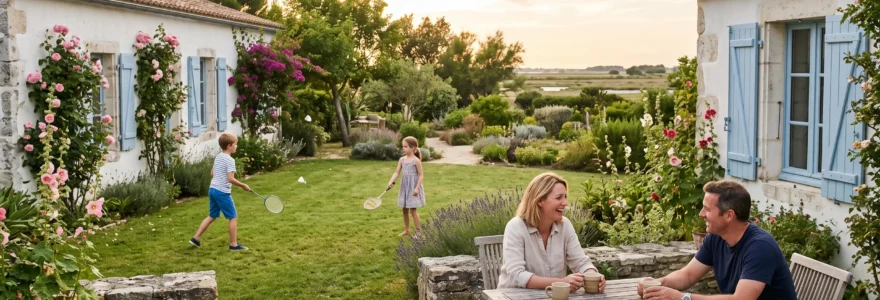
When you’re planning a family holiday on Île de Ré, accommodation choices can make or break the week. A private villa on Île de Ré for families can feel like a bigger spend than a hotel or a standard holiday rental—so it’s worth being clear about what you actually gain, and what you still need to check before booking.
The practical promise is simple: more space, more privacy, and a home setup that fits children’s routines. The catch is that not every listing is equally family-friendly, and local rules around holiday lets can affect what you’re booking and how it’s managed.
Réponse directe : Choose a private villa for a family holiday on Île de Ré if your priority is space (separate bedrooms and outdoor areas), privacy (no shared corridors or pool rules), and the ability to self-cater and keep children’s routines—provided you verify safety features, equipment, location and the legal status of the rental before paying.
How to decide if a villa is the right fit for your family on Île de Ré
- Value: villas cost more, but can reduce “hidden” costs (meals out, extra rooms) if you use the kitchen and space.
- Daily comfort: separate sleeping areas and private outdoor space matter more with naps, early bedtimes and wet beach days.
- Location: prioritise easy cycling routes, nearby beaches, and shops you can reach without a car.
- Safety & equipment: confirm what’s actually provided (cot, stair gates, pool safety, secure garden).
- Before paying: cross-check photos, terms, and local declarations—ask direct questions and get answers in writing.
What Does a Private Villa Change for a Family Holiday on Île de Ré?
A private villa changes the rhythm of the holiday. Compared with a hotel, you typically gain a full living space (not just a bedroom), the option to cook, and an outdoor area where children can play without you negotiating shared spaces. Compared with a standard rental flat, a villa is more likely to offer separate zones (inside and outside) that help families spread out and stay calm.
It also changes how easy it is to enjoy Île de Ré in a family-friendly way: early beach mornings, cycling from village to village, and quiet evenings at “home” when kids are tired. If you’re weighing options, it helps to compare them on concrete, day-to-day family criteria rather than on generic comfort claims.
| Family need | Private villa | Hotel / residence | Standard rental (flat/house) |
|---|---|---|---|
| Space for naps + play | Often easier: separate rooms and larger living areas (depends on the property) | Often limited unless you book multiple rooms or suites | Variable: can be good, but layouts can be tighter |
| Privacy for early bedtimes | High: your own walls, garden, terrace | Lower: shared corridors, neighbours, on-site rules | Medium to high: depends on neighbours and shared areas |
| Meals and snacks flexibility | High: full kitchen makes children’s routines easier | Medium: breakfast options, less flexibility for picky eaters | High if kitchen is well equipped |
| Outdoor time without logistics | Often strong: garden/terrace on-site (check fences and shade) | Often shared: pool areas and quiet hours | Variable: may have balcony or shared courtyard |
| Best fit when… | You plan to spend time “at home” between beach/cycle outings | You want on-site services and don’t mind shared spaces | You want self-catering but don’t need a private garden |
Île de Ré does have a significant hotel offer, but it’s not unlimited. For context, the Insee reports that hotels on the Île de Ré intermunicipal areaas of 1 January 2021, the Île de Ré intermunicipal area had 39 hotels (921 rooms) and 47 campsites, which helps explain why family-sized hotel availability can feel tight in peak periods.
To check the figures and the perimeter used, see the capacité hôtelière de l’Île de Ré selon l’Insee.
Cas pratique
A hypothetical family of four compares two options for the same week: a standard hotel room (plus meals out) versus a private villa with a kitchen and a garden. With the hotel, bedtime means lights out for everyone, and rainy moments feel cramped. With a villa, parents can keep a quieter lounge area while children sleep, and breakfasts/lunches become quick and predictable—useful before heading out by bike to the beach or a village market.
Space, Privacy and Child-Friendly Comfort
For families, “space” isn’t only about square metres—it’s about separation. The most useful villa layouts have at least one quiet sleeping zone, a living area that can handle toys and sandy bags, and an outdoor spot where children can move around without constant “don’t touch that” moments.
Hotels can be convenient, but family comfort often depends on paying for extra rooms or accepting compromises (limited storage, earlier lights-out, less control over meal timings). A standard rental can solve the kitchen problem, yet it may still lack the outdoor privacy that makes downtime genuinely easy on Île de Ré.
What should you check for children’s comfort and safety in a villa?
Don’t assume child-friendly equipment comes as standard. Listings vary widely, and photos can hide the details that matter (stairs, unfenced pools, road proximity). The goal is to confirm what is provided, what is optional, and what you must bring.
Family equipment to confirm before you book : ask specifically about a cot/travel cot, high chair, blackout options in bedrooms, stair gates (if needed), safe outdoor shade, and secure storage for bikes and pushchairs.
- Sleeping setup: number of bedrooms, bed types, and whether a child can sleep without a busy living room next door.
- Kitchen basics: dishwasher, enough crockery, fridge space, and safe cooking setup if you’ll prepare simple meals.
- Outdoor safety: fencing, gate locks, and how children access the garden (especially for toddlers).
- Water safety: if there’s a pool, ask what safety features exist and how they’re used in practice.
- Noise and privacy: neighbouring properties, shared driveways, or terraces overlooked by other homes.
If you’re still unsure whether a villa “justifies” its cost, reframe the question: will you use the extra space and privacy every day? Families who plan long lunches at the villa, naps, early nights, or car-free days cycling tend to feel the difference most. If you expect to be out from morning to late evening, a hotel or a simpler rental may match your needs better.
Choosing the Right Location on the Island
On Île de Ré, the right location is often less about being “central” and more about being easy: quick access to beaches, flat cycle routes, and nearby essentials such as bakeries, markets and pharmacies. A villa that looks perfect on photos can become tiring if you need the car for every errand with children.
Rather than naming “best villages” without an official, verifiable ranking, it’s safer—and more useful—to choose a zone based on how your family travels on the island: mostly by bike, mostly on foot in a village, or a mix with a car for day trips.
Ocean side or harbour/marsh side: which suits families best?
Ocean-facing areas tend to appeal if your priority is beach time and that classic Atlantic feel. The trade-off can be wind exposure and a slightly more “holiday-only” rhythm in some spots, depending on the exact address and season.
Harbour/marsh-facing areas can be calmer for evening strolls and practical village life, which many parents appreciate with young children. The trade-off is that you may cycle a little further for your preferred beach, so check the route rather than only the distance on a map.
Wherever you choose, think in family logistics: can you cycle safely to the beach with a child seat, stop for groceries without detours, and return easily for naps? If the answer is yes, a private villa becomes much more enjoyable because you’ll actually use it as a base—not just as a place to sleep.
How to Book a Family-Friendly Villa Without Unpleasant Surprises?
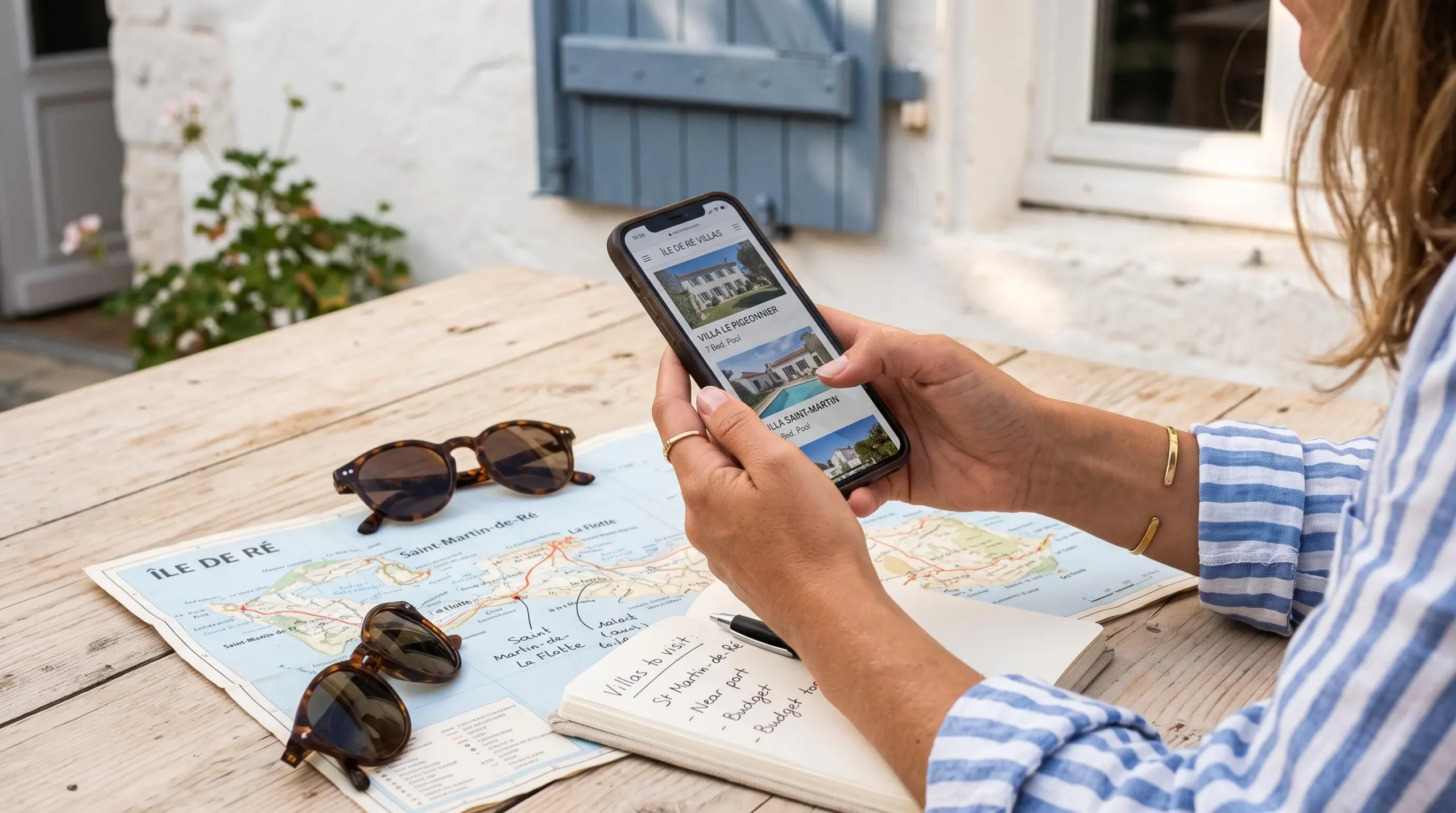
The safest approach is to treat booking as a verification process, not a leap of faith. That means checking the listing materials (photos and description), confirming family-critical points directly with the owner/agency, and understanding the legal framing of the accommodation you’re renting.
This matters on Île de Ré because the island has specific local rules for “meublés de tourisme”. The Communauté de Communes de l’Île de Ré explains that holiday lets may require formal declarations (and, depending on the situation, a change-of-use authorisation). You can consult the déclaration officielle d’un meublé de tourisme information to understand what a properly declared rental involves.
What should families check before booking a holiday villa on Île de Ré?
- Match the layout to your routines
Confirm bedrooms, bed sizes, where children would sleep, and whether there’s a quiet area for early nights.
- Validate the “must-haves” in writing
Ask direct questions about a cot/high chair, stair safety, outdoor fencing, bike storage, parking, and Wi‑Fi if you need it for work or planning.
- Cross-check photos against the description
Look for what’s missing: staircases, road edges, shallow vs deep pool areas, or limited shade in outdoor spaces.
- Clarify what’s included in the price
Before paying, confirm cleaning arrangements, deposits/caution, linen/towels, check-in timing, and any optional extras you may actually need with children.
- Check the rental’s status
Ask whether the property is declared as a meublé de tourisme and who your point of contact is for issues during the stay.
Budget reality check for families : without recent, official price benchmarks for Île de Ré, it’s safer to compare “total trip cost” yourself (extra rooms, meals out, laundry, parking) rather than assuming a villa is automatically better value.
If you want the local regulatory context in one place, the Communauté de Communes de l’Île de Ré also published a summary of rules that took effect from 1 June 2025, including limits on meublés de tourisme authorisations; see règlement officiel des meublés de tourisme.
Planning Your Île de Ré Family Trip
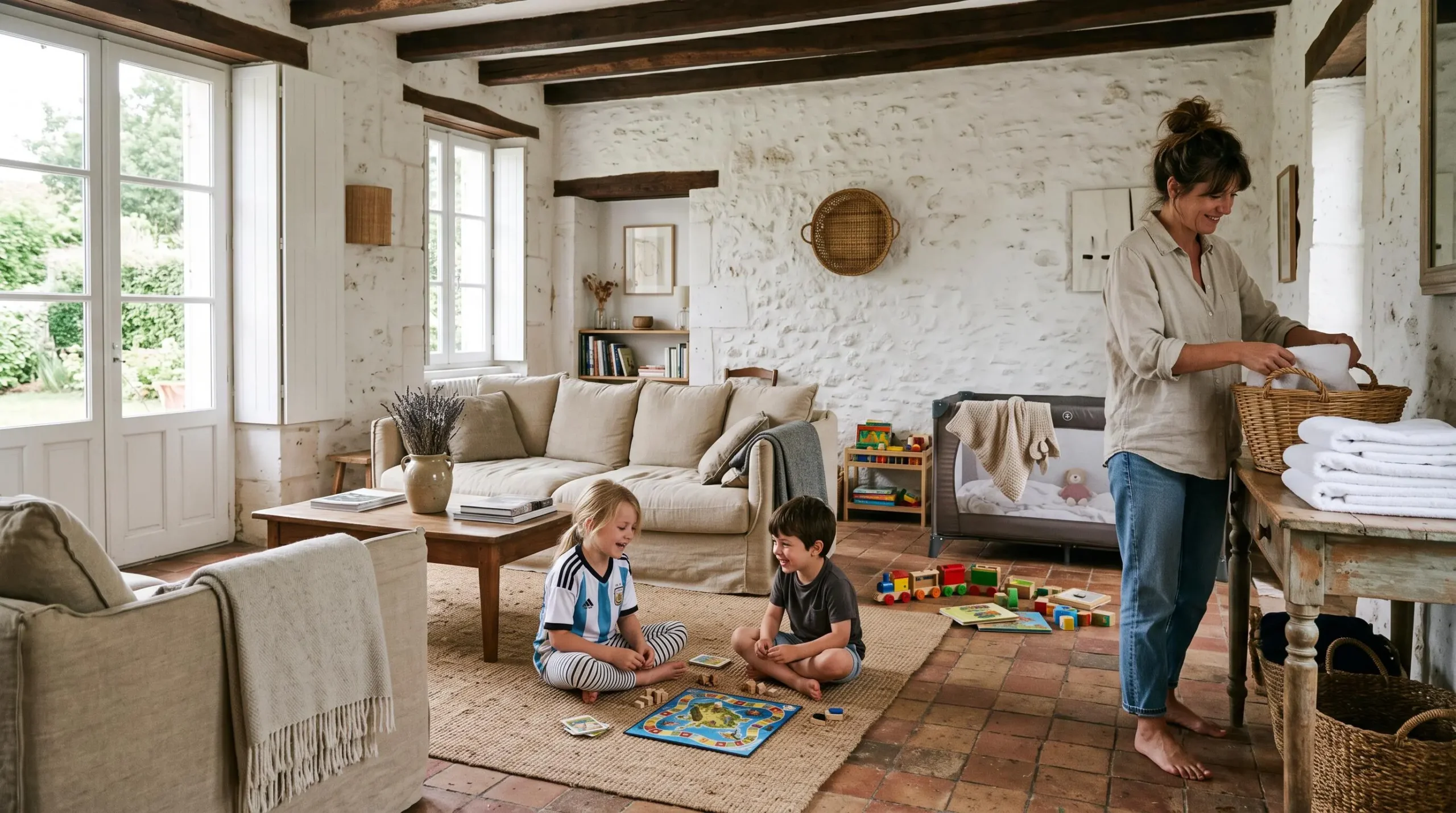
Once the villa is booked, planning becomes easier if you build the week around what Île de Ré does best with children: short distances, easy cycling, beaches, and village stops for everyday needs. A villa works particularly well when you plan for slower days—breakfast at home, beach time, lunch back at the villa, then a bike ride or market visit later.
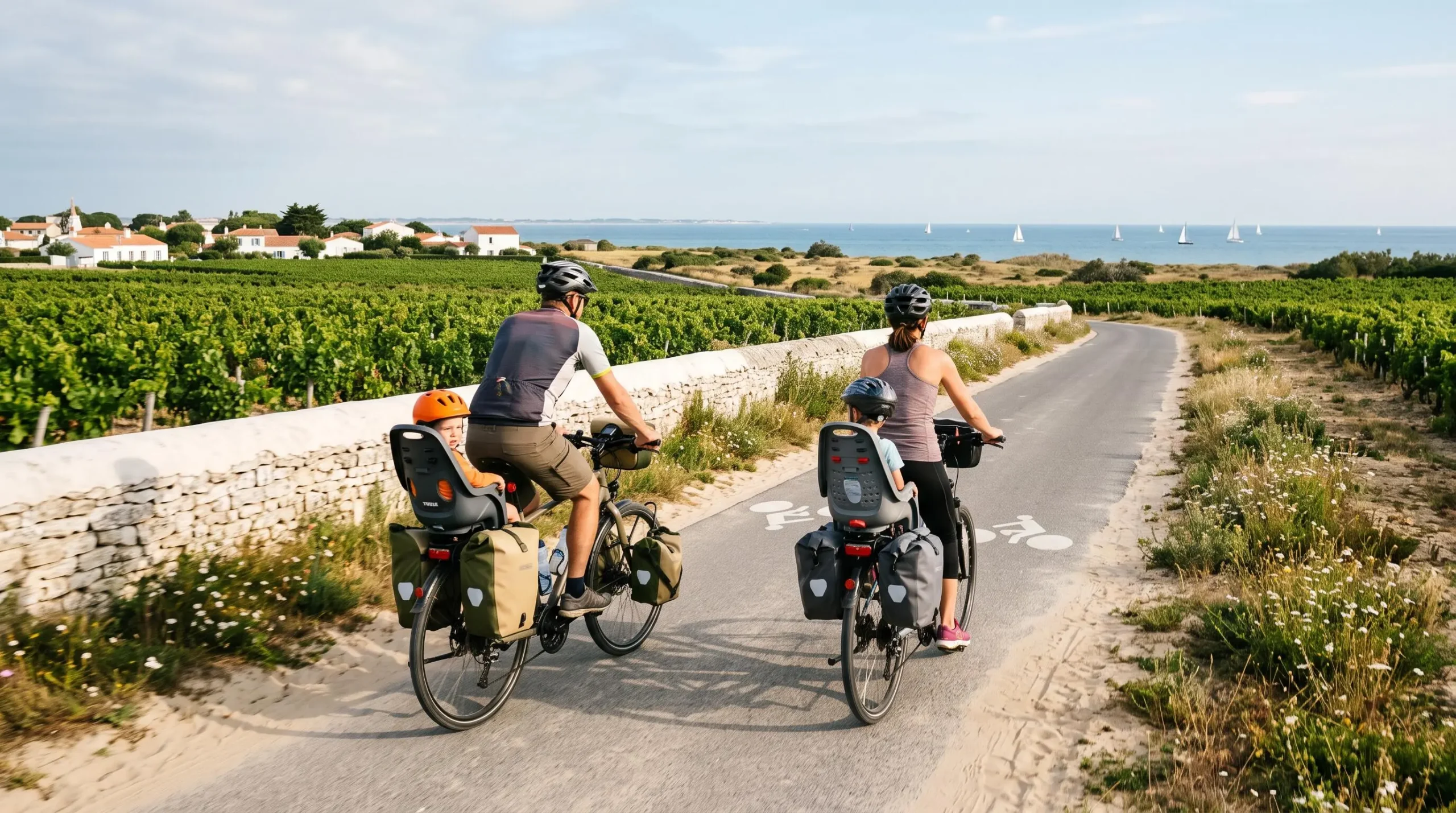
Peak periods can compress availability across the island, so families often benefit from booking early—especially if you need a specific layout (separate bedrooms) or safety features. If you’ll rely on bikes, consider arranging rentals ahead and confirming storage at the villa, so you don’t end up carrying equipment through narrow entrances or leaving it unsecured overnight.
If you’re still deciding between destinations and trip formats with children, this internal guide on how many days can help you sanity-check pacing and downtime—useful principles even when your base is a villa on Île de Ré.
Is a private villa worth the extra cost for a family with children on Île de Ré?
It can be worth it if your family will use the space and privacy daily: separate bedrooms for naps and early nights, a kitchen for predictable meals, and an outdoor area for play between beach and cycling outings. If you expect to spend most days out and to eat out every meal, the added value may be smaller compared with a hotel or a simpler rental.
Where to stay on Île de Ré with children, close to beaches and cycle paths?
Aim for a location that lets you reach a beach and everyday shops by safe, straightforward cycling routes. Rather than chasing a “best village” label, check the specific route from the address to your priorities (beach access, bakery/market, pharmacy) and whether the return journey works for tired children.
How can you reduce booking risks with a family villa?
Use a short verification routine: confirm must-have equipment in writing (cot, high chair, safety points), cross-check photos vs description, clarify what’s included (cleaning, linen, deposit), and ask whether the property is properly declared as a meublé de tourisme. This shifts your decision from “hope” to documented checks.
A private villa on Île de Ré is usually the best match for families who want calm, space and predictable routines—without giving up the island’s simple pleasures like cycling and beach days. The deciding factor isn’t the label “villa”, but whether the property’s layout, safety and location fit your children’s ages and your day-to-day holiday plan.